10 Mobile App Ad Examples That Can Increase Installs in 2026
Ten app ad approaches from Tinder, Finch, NordVPN and more — and how to turn their hooks, proof and payoff into your next creative test.
The best mobile app ad examples do more than look polished. They make the app's value easy to understand, give the viewer a clear reason to care, and move quickly toward an install-worthy payoff. For mobile marketers, the useful question is not "Which ad looks best?" but "Which creative idea is clear enough to test and scale?" This guide breaks down 10 app ad approaches and the lessons behind them.
Key Takeaways
- Strong mobile app ad examples usually lead with one clear problem, outcome, or identity.
- Utility apps often show the job they remove, while lifestyle apps sell emotion, aspiration, or belonging.
- Repeated concepts matter more than one attractive creative. Longevity and reuse show where advertisers keep investing.
- Competitor research works best when you study the mechanism behind an ad instead of copying the execution.
- Winneradspy helps marketers compare tracked creatives and recurring patterns before building the next test.
What the Best Mobile App Ad Examples Have in Common
When reviewing mobile app ad examples, start with the viewer's decision. Is the creative helping them save time, avoid a problem, reach a result, join an identity, or satisfy curiosity?
Use four notes for every creative:
- Hook: What earns attention first?
- Proof: Why should the viewer believe the claim?
- Payoff: What changes after using the app?
- CTA: What action comes next?
10 Mobile App Ad Examples Worth Studying
These mobile app ad examples show different creative approaches worth studying. Focus on why the message is easy to process, not on copying the execution.
1. Tinder: Sell the Identity Before the Feature List
Dating apps do not always need to explain matching mechanics. The stronger angle can be possibility, confidence, connection, or the social experience the user wants.
When the category is familiar, lead with the emotional outcome instead of feature explanations.
2. Finch: Turn the Product Mechanic Into the Story
Finch turns self-care into an experience built around caring for a virtual pet. That gives the creative a built-in narrative instead of forcing the ad to explain a long feature list.
For products with a distinctive mechanic, let the product behavior become the hook.
3. CamScanner: Put the Utility Up Front
Utility apps usually benefit from direct problem-solution messaging. Show the messy document problem first, then the faster digital outcome.
The viewer should understand the job being removed before hearing about secondary features.
4. Babbel: Pair the Outcome With a Reason to Act
Language-learning ads become clearer when the promise is specific. Instead of only saying "learn a language," connect progress with a timeframe, use case, offer, or confidence-building message.
5. Blinkist: Sell the Better Version of the User
Blinkist-style positioning can make the benefit aspirational rather than technical. The product is not only about shorter summaries; it is about becoming more informed without needing hours of reading.
6. Splice: Make the Creative Feel Native to the Audience
Creator tools often work better when the ad feels like content from the community rather than a traditional software demo.
A creator-led clip or edit transformation can communicate the product in the audience's own language.
7. NordVPN: Make an Invisible Problem Concrete
Privacy and security are difficult to visualize until the ad turns the risk into a recognizable situation.
Recognizable risks make an abstract benefit easier to understand.
8. Lingokids: Use Fast Proof for a Busy Decision-Maker
Apps aimed at parents need to communicate value quickly.
Clear proof points such as content variety, age fit, safety, or an ad-free experience reduce the amount of explanation required.
9. Perplexity: Lead With the New Capability
Fast-moving AI products can build the hook around what the product now lets users do.
Instead of generic "AI assistant" language, show a real workflow or new capability.
10. Coursera: Connect the Product to the Next Outcome
Education apps become clearer when the ad narrows a broad catalog into one concrete goal.
A career outcome gives the viewer a stronger reason to install than promoting a huge course catalog.
Compare Patterns, Not Just Individual Ads
A swipe file becomes more useful when you can see which ideas repeat. The strongest mobile app ad examples become more useful when you compare them as patterns, not isolated wins.
Winneradspy's mobile creative library lets marketers search apps and developers and review tracked competitor creatives in one place. Compare recurring hooks, formats, messages, and visual patterns.
When studying mobile app ad examples, repetition is often more useful than one impressive creative because it shows which ideas advertisers keep returning to.
Separate Winning Signals From Creative Noise
Not every competitor ad deserves the same attention.
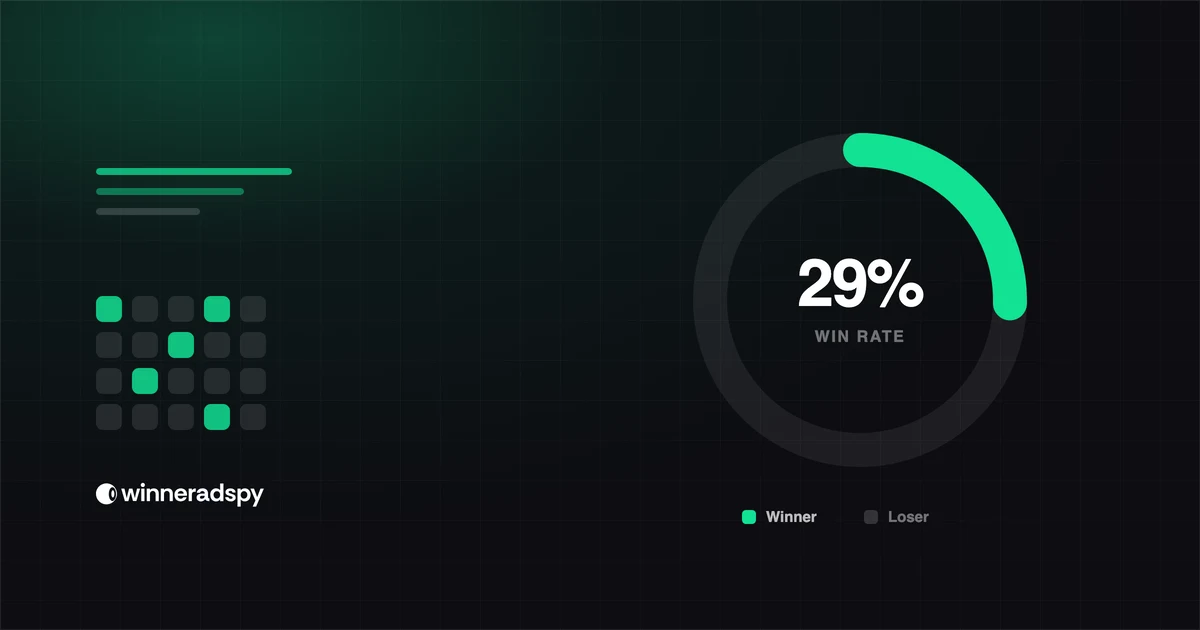
Winneradspy's How Winneradspy Determines Winning vs. Losing Ad Creatives explains how signals such as creative longevity, platform spread, and reuse help distinguish stronger patterns from ads that disappear quickly.
Instead of asking "Do I like this ad?", ask whether the concept shows signs of continued investment.
Turn Examples Into Better Creative Tests
The next step is not copying the winner. Use mobile app ad examples to turn repeated patterns into testable hypotheses.
Winneradspy's competitor analysis for mobile app advertisers helps teams compare recurring hooks, messaging patterns, platform distribution, and creative lifespan before deciding what to test.
For each concept, note the problem, hook, proof, emotional angle, and CTA, then rebuild them around your own product.
Measure the Creative Beyond the Click
Mobile app ad examples are useful for ideation, but your own campaign still needs performance data.
Compare CPI, CPA, conversion quality, retention, and downstream value. A creative with a strong CTR can still be weak if it attracts low-intent users.
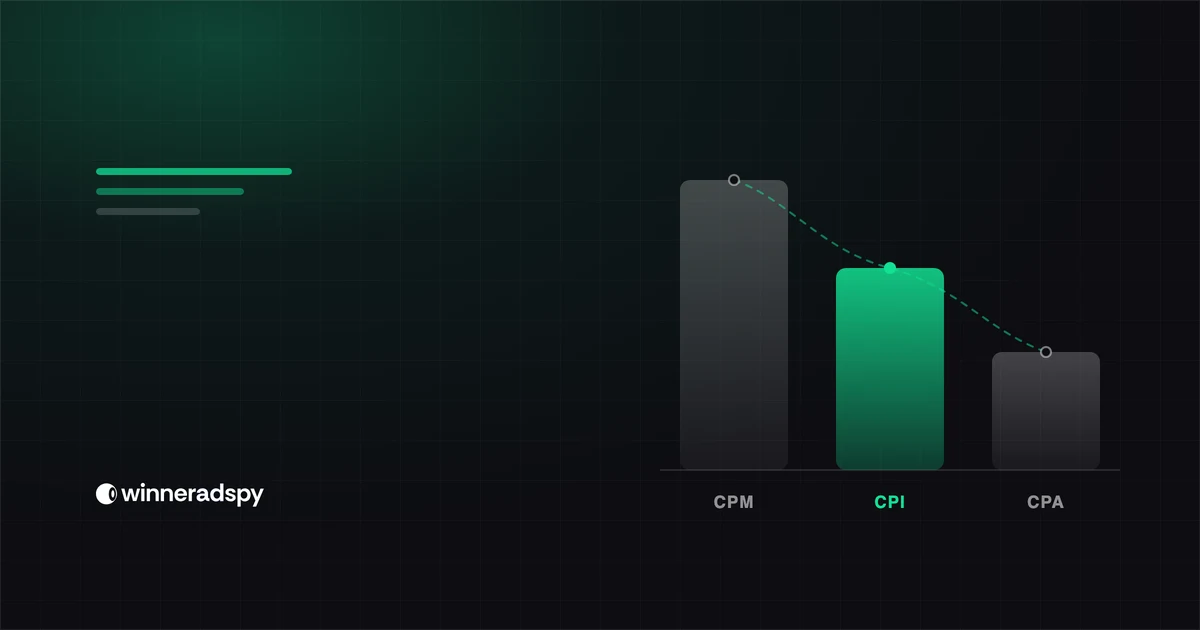
Winneradspy's CPA, CPM, and CPI guide explains how the main mobile advertising cost metrics connect.
Build a Repeatable Creative Research Loop
Do not wait until performance drops to research the market.
Review competitor creatives regularly, shortlist patterns worth testing, and compare controlled variations. This turns mobile app ad examples from inspiration into a repeatable process.
Use Winneradspy to study competitor creatives, compare stronger and weaker patterns, and build your next creative brief with more evidence before you spend.
Stop guessing which ads work
- Winner & loser label on every creative
- Search any competitor app or developer
- Real-time data from Meta & Google Ads
Or $149 per year
See which ads are winning right now
Browse 20M+ mobile app ad creatives and find out which ones competitors are actually scaling.